FinLend
AI and full-stack developer
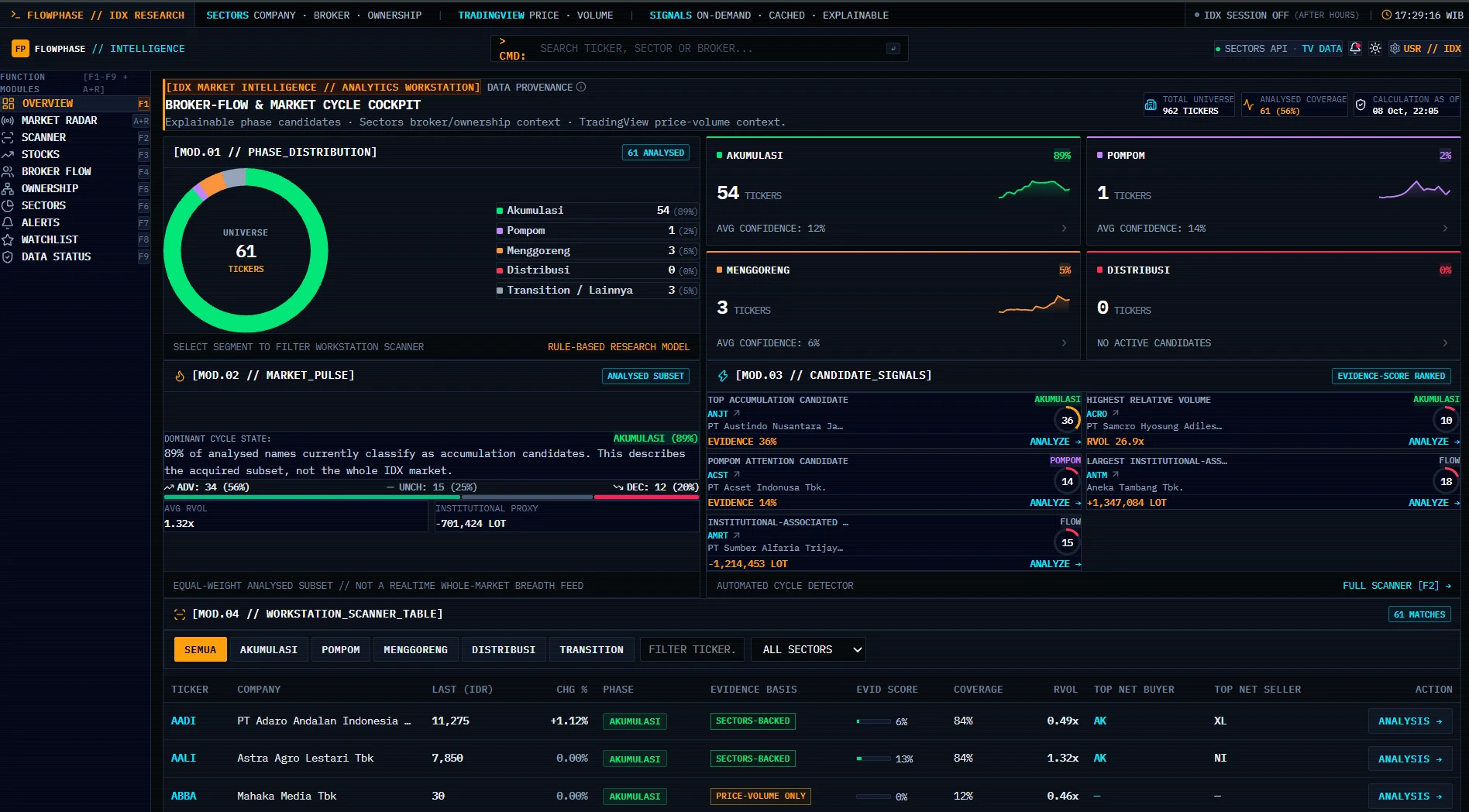
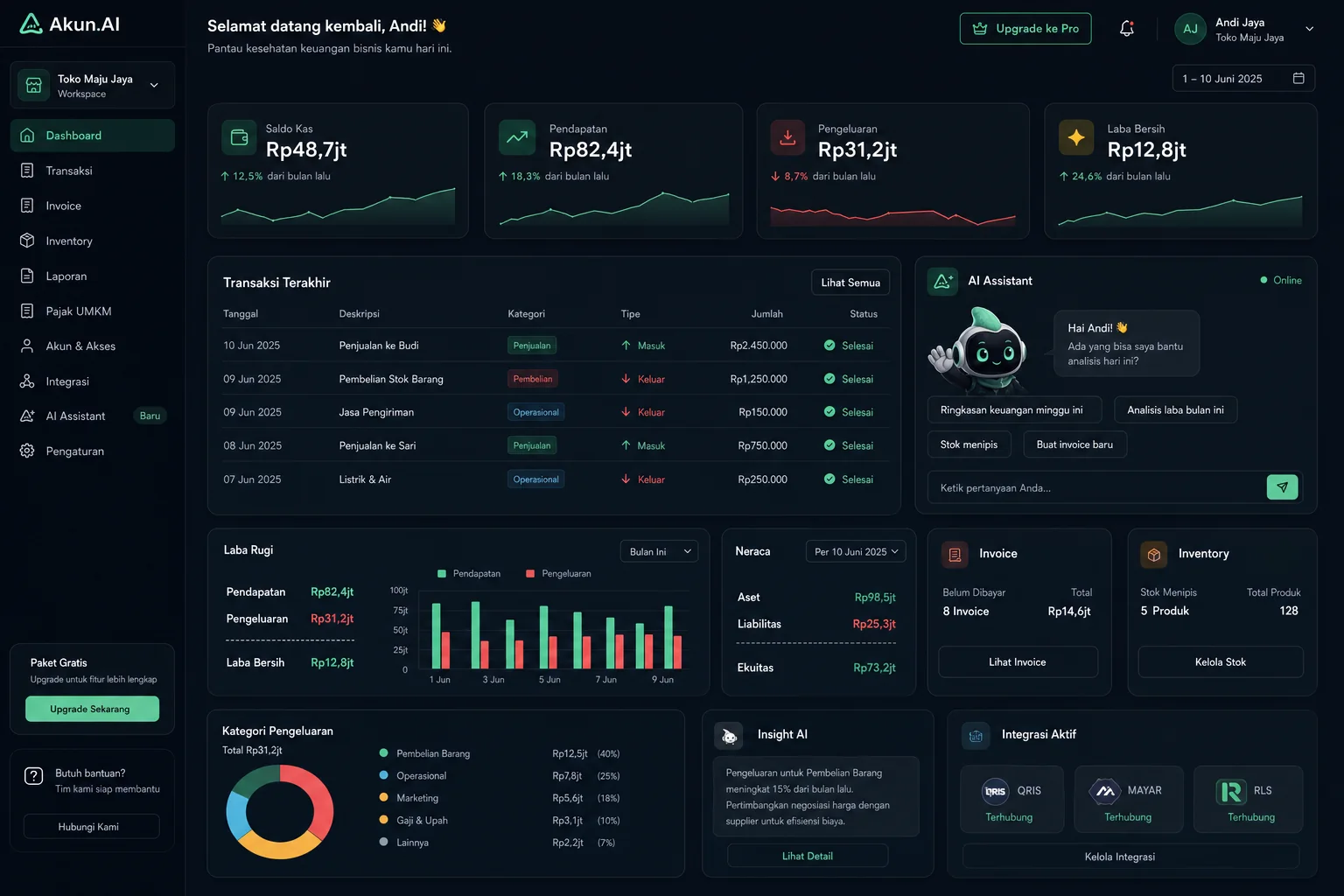
An AI credit-risk simulation system that combines a neural-network risk model with fuzzy logic to recommend credit decisions, limits, and interest.
AI and full-stack developer
Delivered an end-to-end credit simulation flow where applicant, finance, loan, and collateral data are processed into risk, approval, limit, and interest recommendations.
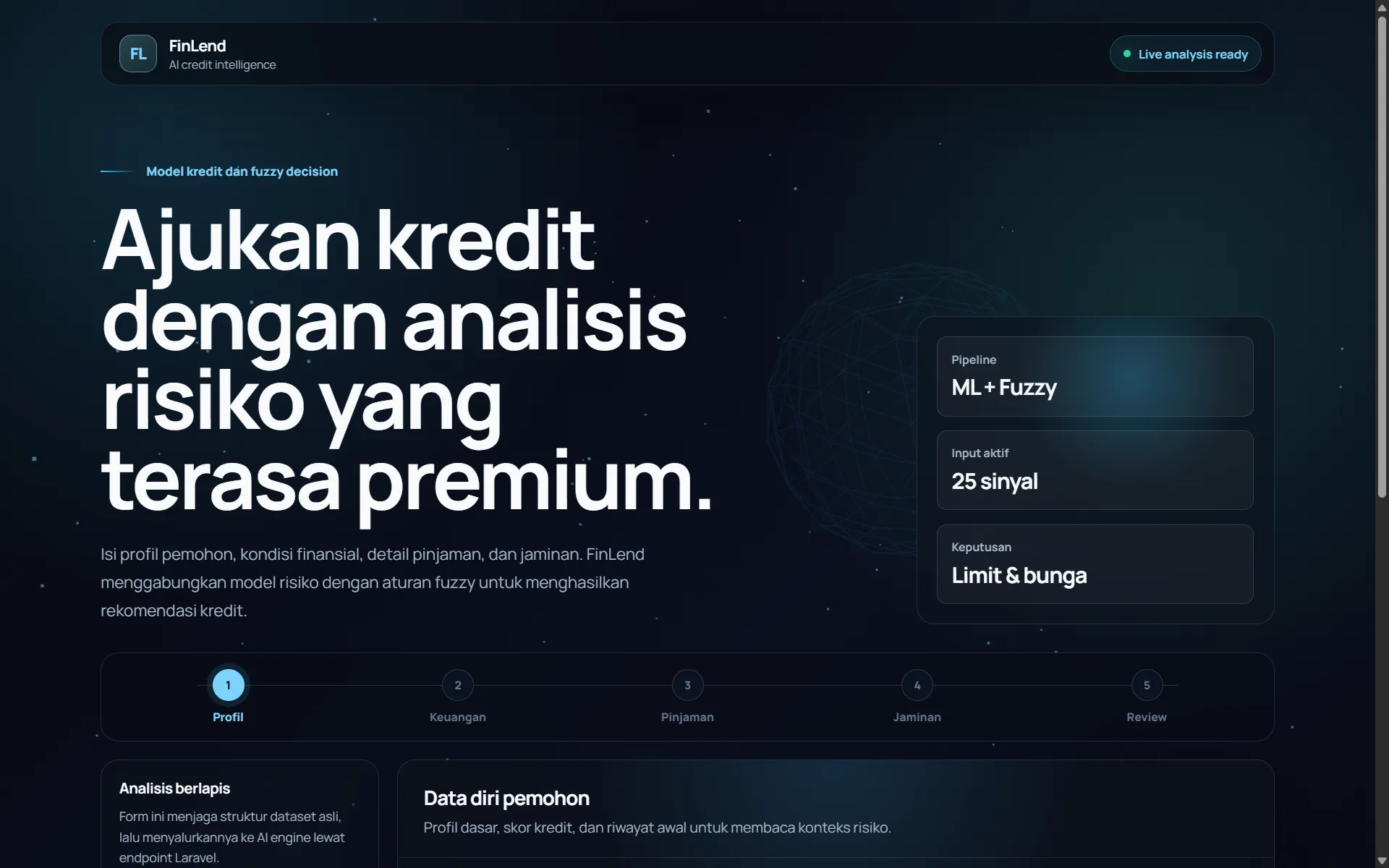
01 / 03 An AI credit-risk simulation system that combines a neural-network risk model with fuzzy logic to recommend credit decisions, limits, and interest.
The problem to solve.
FinLend is an academic AI credit-intelligence project built with a Laravel interface and a FastAPI AI engine. It turns 25 structured applicant signals into a credit-risk recommendation using a feedforward neural network and fuzzy logic decision layer.
Problem
Credit evaluation needs structured applicant intake, explainable risk signals, and decision support that can connect model output to a readable recommendation.
People
Credit analysts, fintech builders, and academic AIML evaluators
Key decisions.
- Keeping the model input structure aligned between Laravel and FastAPI
- Presenting model output as a readable credit recommendation rather than a black-box score
- Handling academic dataset constraints while keeping the demo believable
What I built.
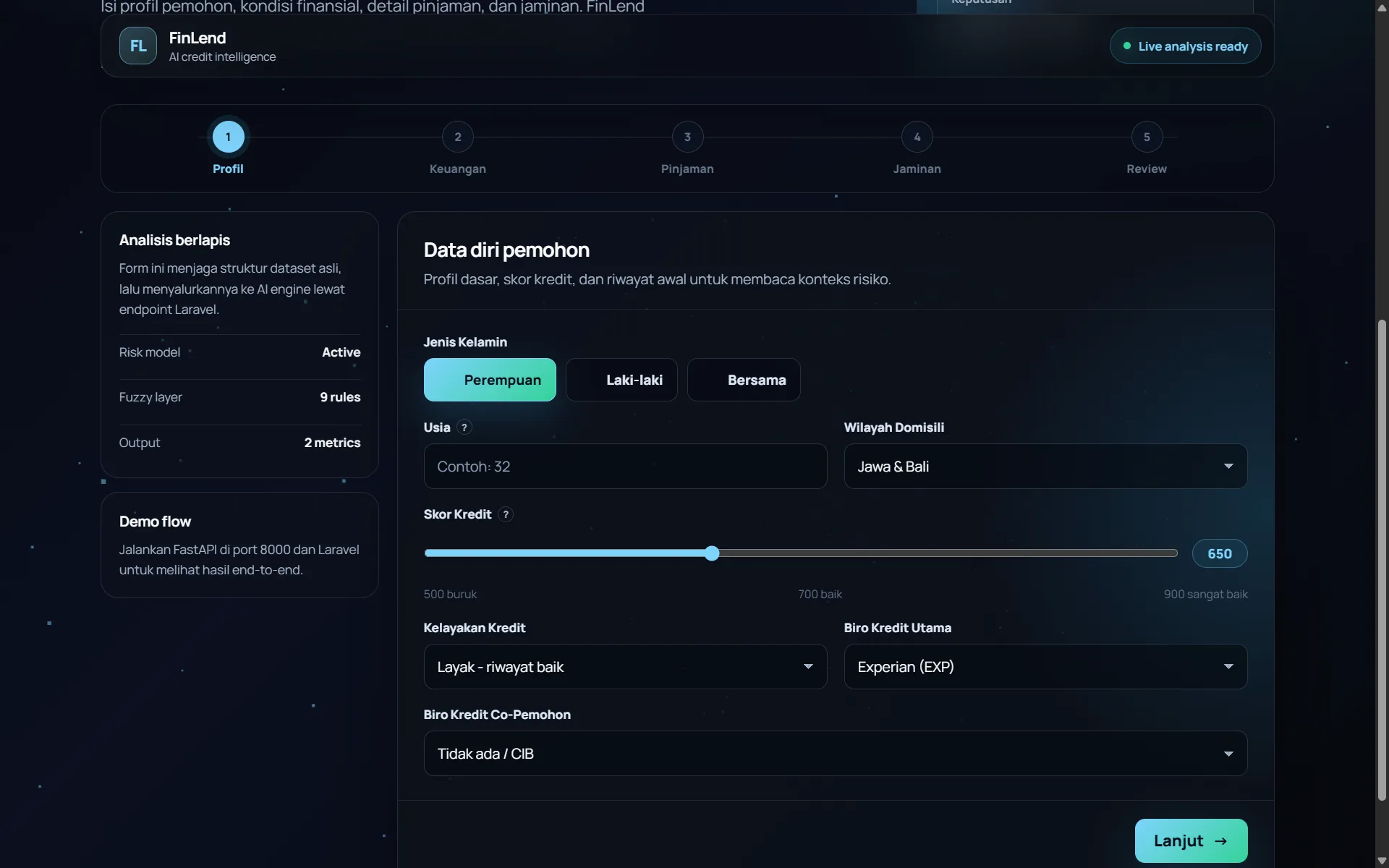
Built the Laravel web interface, connected it to a FastAPI AI engine, designed the 25-feature intake flow, and shaped the ML plus fuzzy decision pipeline into a polished credit simulation experience.
- Built the Laravel multi-step credit application interface and connected it to the FastAPI AI engine.
- Mapped the 25-feature dataset structure into a web form, request payload, risk model input, and readable recommendation output.
- Combined neural-network risk scoring with fuzzy logic so the product can explain credit decisions as limit and interest recommendations.
Explore the pipeline
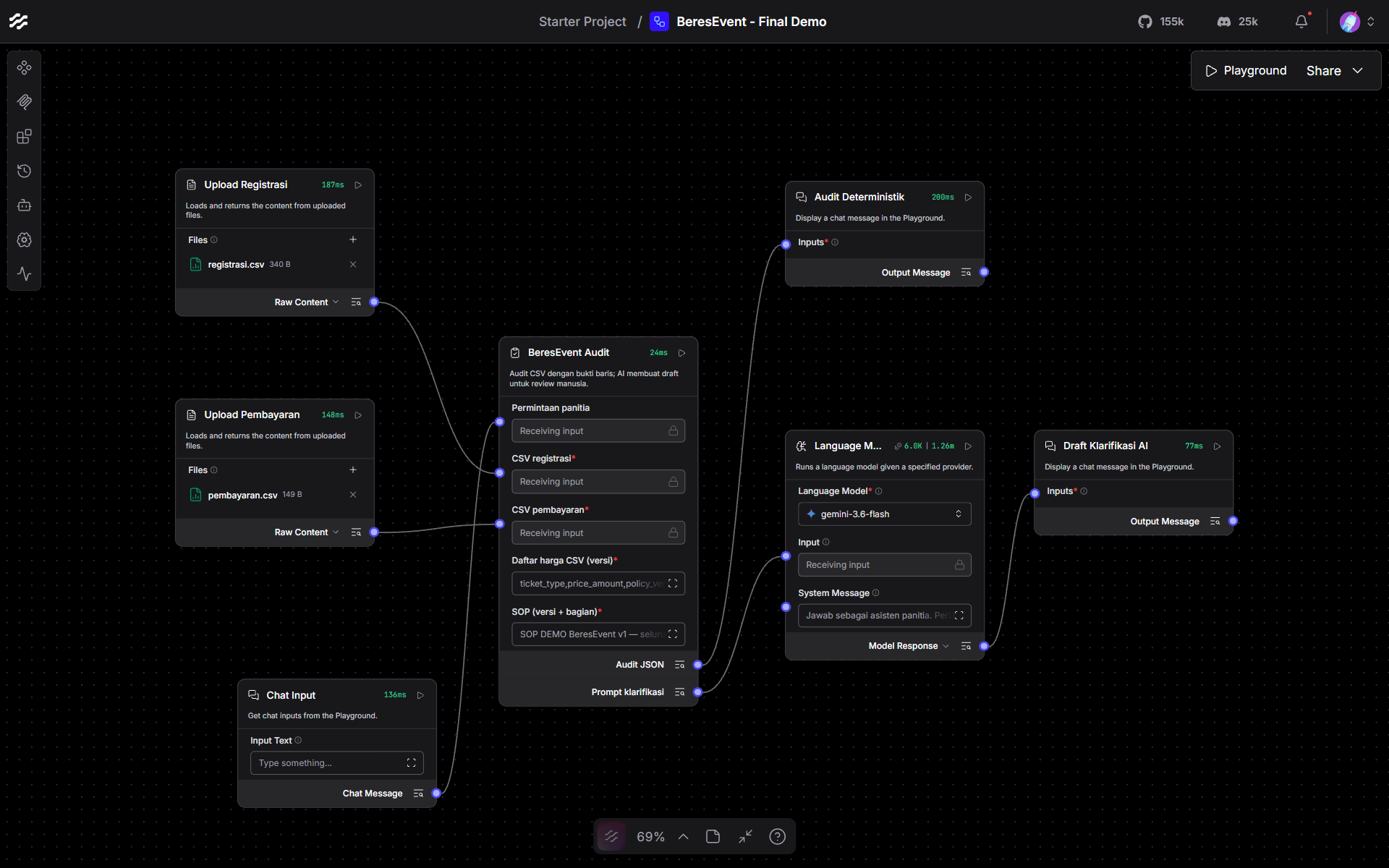
01User enters 25 applicant, financial, loan, and collateral signals in the Laravel form.
Laravel handles the web flow and sends a structured request to FastAPI; the Python service returns risk and fuzzy decision outputs to the result page.
02Laravel sends the structured payload to the FastAPI /hitung-kredit endpoint.
Laravel sends the structured payload to the FastAPI /hitung-kredit endpoint.
03The neural-network model estimates default risk from the scaled feature set.
The neural-network model estimates default risk from the scaled feature set.
04Fuzzy logic translates risk and financial context into limit and interest recommendations.
Fuzzy logic translates risk and financial context into limit and interest recommendations.
05Laravel renders the decision output as an approval or rejection simulation with readable context.
Inputs are constrained to the 25 model features, then scaled and processed before recommendation output.
Results, with context.
Built as the final AIML course project with a working Laravel-to-FastAPI AI pipeline and a polished credit-analysis interface.
Under the hood.
Technologies & features +
Laravel / Python / FastAPI / Machine Learning / Fuzzy Logic / Tailwind CSS
- Five-step credit application flow
- 25-feature applicant and loan intake
- FastAPI AI engine integration
- Feedforward neural-network risk scoring
- Fuzzy logic for credit limit and interest recommendation
- Laravel result interface for approval or rejection output
AI system notes +
Provider / model
Python FastAPI AI engine using MLPClassifier plus a fuzzy logic decision layer.
Data flow
Laravel handles the web flow and sends a structured request to FastAPI; the Python service returns risk and fuzzy decision outputs to the result page.
Validation
Inputs are constrained to the 25 model features, then scaled and processed before recommendation output.
Failure handling
The web flow depends on the FastAPI service being available on port 8000; connection issues are surfaced as a demo/runtime dependency rather than silently faking a result.
Limitations
Academic simulation using loan-default data and USD-scale assumptions. It is not a production credit approval system and would need fairness, calibration, and compliance validation.